Common Reasons Children Struggle to Read & How to Help?
Watching a child struggling with reading can be heartbreaking for any parent. You might notice tears during homework time, avoidance when it’s time to open a book, or frustration when trying to sound out simple words. Reading isn’t just an academic requirement; it’s the foundation for all future learning, self-esteem, and cognitive growth.
When a child stumbles with reading, it rarely stems from a lack of effort or intelligence. Instead, lag in their literacy development usually cause the issue. Identifying these root causes is the first step toward transforming frustration into confidence.
4 Common Reasons a Child Struggles with Reading
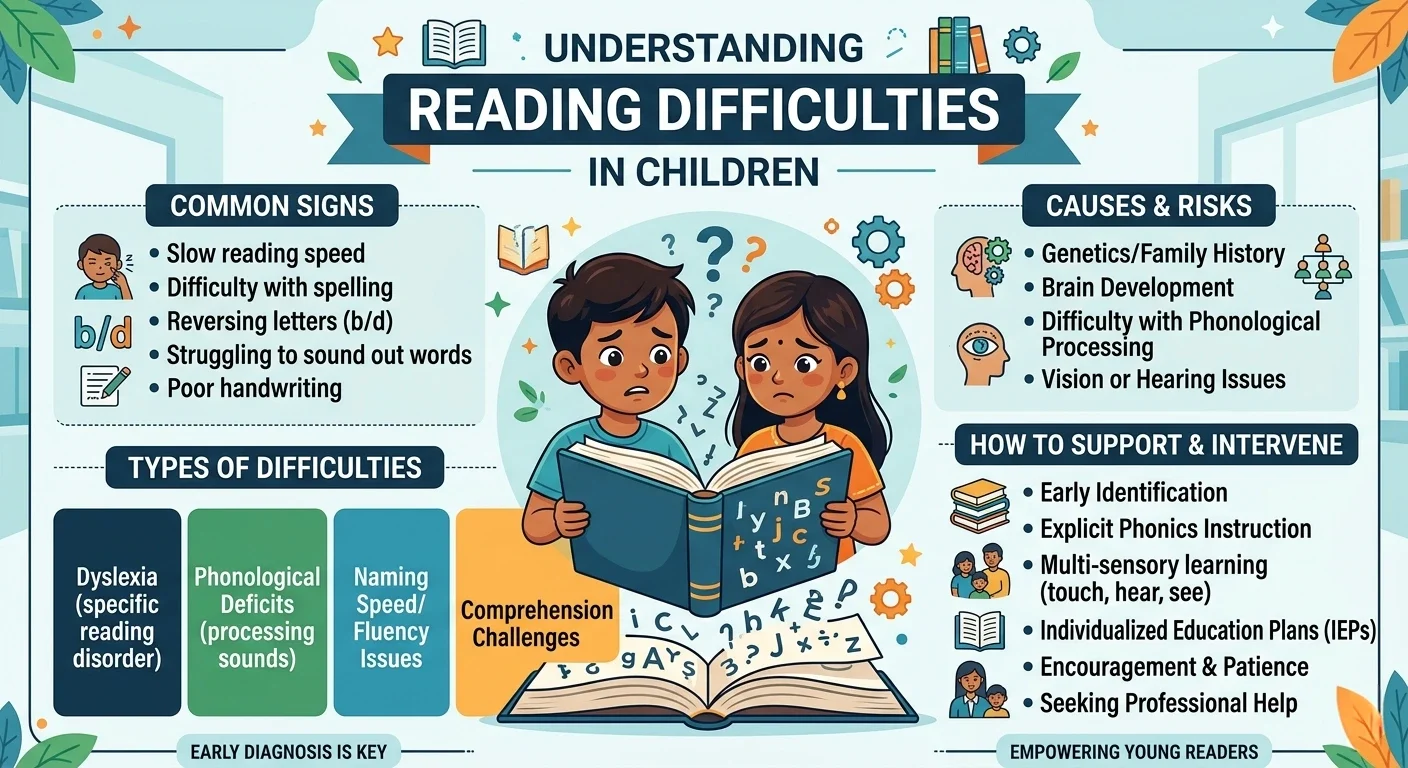
1. Phonics & Decoding Gaps
Reading requires translating visual letters into speech sounds (phonics) and blending them together to form words. If a child hasn’t mastered letter-sound relationships, decoding even basic words becomes an exhausting chore. Without a strong phonetic foundation, reading fluency quickly stalls.
2. Weak Vocabulary & Oral Language Skills
A child might successfully sound out a word, but if they don’t know what it means, the sentence loses its meaning. A limited vocabulary makes reading comprehension nearly impossible, leading children to lose interest or become easily confused.
3. Attention & Working Memory Challenges
Reading demands multi-tasking: keeping track of letters, remembering the beginning of a sentence while reaching the end, and holding the plot in mind simultaneously. Children dealing with short attention spans or working memory gaps often lose their place or forget what they just read, leading to cognitive fatigue.
4. Reading Anxiety & Low Confidence
Repeated difficulty often creates emotional barriers. When a child struggling with reading anticipates failure, their anxiety spikes, shutting down the brain’s ability to absorb new information. This leads to reading avoidance, misbehaved reluctance, or quiet withdrawal.
Practical Ways to Support Your Reader at Home
Helping your child doesn’t require hours of gruelling drills. Consistency and supportive strategies make a profound difference.
- Adopt the “10-Minute Daily Habit”: Short, focused reading sessions are far more effective than long, stressful study blocks. Dedicate just 10 minutes a day to structured, joyful reading practice.
- Use the “3-Act Play” Approach:
- Before Reading: Talk about the book’s cover, pictures, and topic to activate prior knowledge.
- During Reading: Take turns reading aloud. Model fluent reading with expressive voices and natural pauses.
- After Reading: Ask open-ended questions like “Why do you think the character made that choice?” to build comprehension rather than just checking recall.
- Play Word Games: Turn phonics and vocabulary into low-stakes play. Use rhyming games, word scavenger hunts, or comic strip sketching to keep engagement high.
- Focus on Encouragement, Not Correction: Avoid stopping your child at every single error. Let them finish a thought or sentence, and encourage them to use context clues when stuck.
How Supriya Raja Can Help
When general school support or standardized tutoring isn’t enough, specialized, systematic intervention becomes necessary.
At Power Reading Hub Supriya Raja focusses uncovering exactly where a child struggling with reading lost their footing. Built on over 17 years of specialized remedial literacy experience, her methodology uses a structured 4-Pillar Power Reading System™:
- Pinpoint Diagnosis: Identifying exact gaps in phonics, syntax, or comprehension.
- Systematic Remediation: Building mechanics step-by-step so foundation gaps disappear permanently.
- Behavioral & Attention Support: Addressing low confidence, attention difficulties, and screen fatigue in a joyful, non-judgmental space.
- Parent Partnership: Empowering parents with actionable tools and emotional guidance for home support.
Every child can become a fluent, confident reader when given the right tools and systematic support. By catching gaps early and taking a structured approach, you can turn reading time into a joyous, empowering daily habit.