Here are 7 Proven Ways to Help
Watching your child freeze when asked to read aloud through every line of homework can be heart-wrenching. As parents, we want reading to be a gateway to discovery and confidence, not a daily source of tears and frustration.
If you are currently navigating this challenge, know that you are not alone. Reading difficulties in children are far more common than most realize, and a temporary bump in the road does not define your child’s academic future. Recognizing the early signs of reading struggle such as guessing words based on the first letter, avoiding books, or becoming unusually tired during study time is the crucial first step toward positive change.
With the right approach, patience, and targeted guidance, every child can learn to read with confidence. Here are seven evidence-based strategies to transform your home into a supportive launchpad for your young reader.
1. Spot the Signs Early and Normalize the Journey
Before jumping into remedies, it helps to understand what signs of reading struggle look like in everyday life. Children rarely say, “I’m having trouble blending phonemes.” Instead, they might complain of stomach aches before reading time, substitute words that look somewhat similar, or read with flat, monotone expressions. Providing early reading help for parents starts with removing shame from the process. Let your child know that learning to read is like learning a new sport or instrument—it takes time, practice, and a few awkward missteps along the way.
2. Strengthen Phonemic Awareness
Phonemic awareness—the ability to hear, identify, and manipulate individual sounds (phonemes) in spoken words—is the bedrock of literacy. Before children can decode written letters, they must understand that spoken words are made up of smaller sound units.
- Play simple rhyming games in the car.
- Ask your child to tap out the individual sounds in short words (e.g., /c/ – /a/ – /t/).
- Practice swapping initial sounds (change “mat” to “sat”) orally to build auditory processing skills.
3. Use Multisensory Reading Techniques
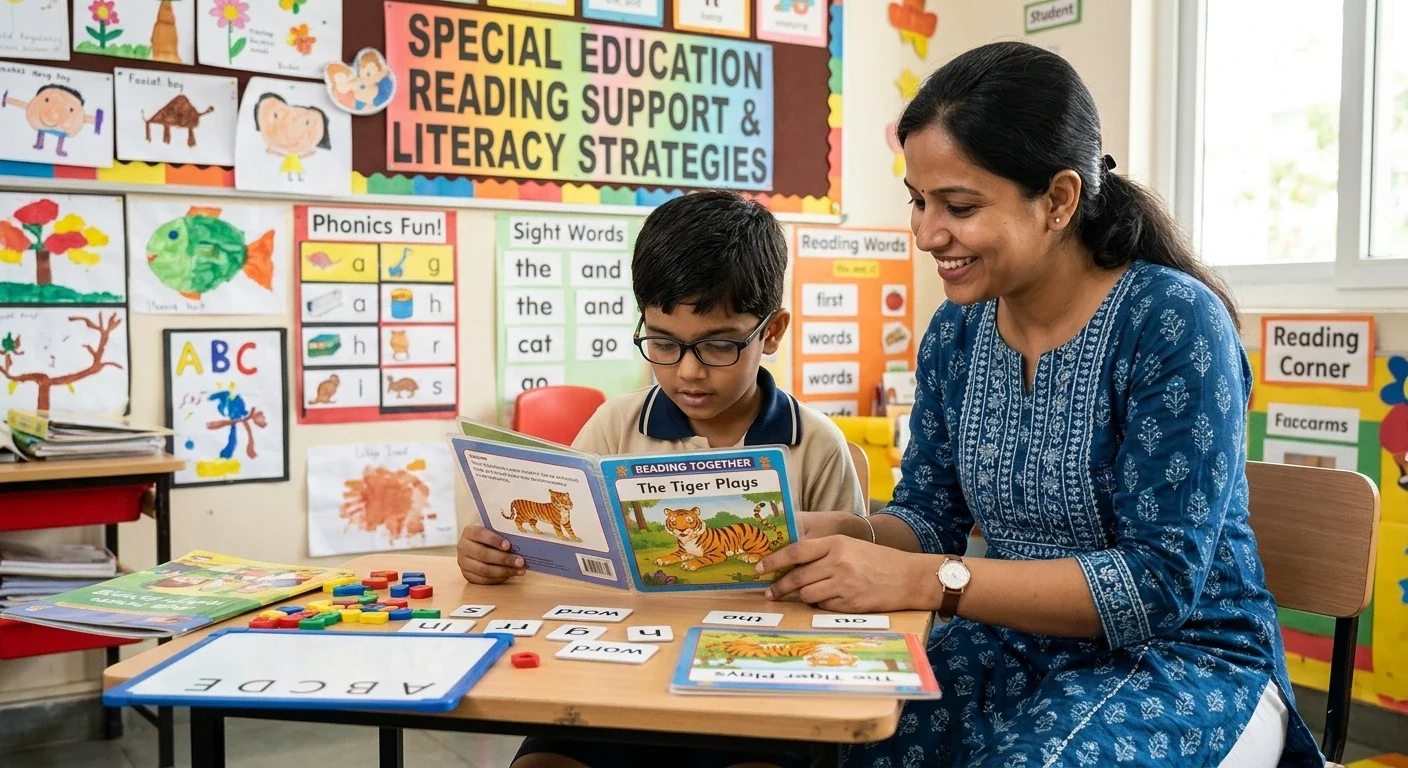
Children learn best when multiple senses engage simultaneously. If traditional flashcards lead to resistance, switch to tactile and visual learning:
- Trace and Speak: Have your child trace letter shapes in sand, shaving cream, or textured paper while saying the corresponding sound aloud.
- Color-Coded Letters: Use red plastic letters for vowels and blue for consonants to make word patterns visually distinct.
- Tap the Rhythm: Encourage your child to tap their fingers along their arm for each sound segment before blending the full word.
4. Read Together Daily Using Shared Reading
When a child struggling with reading is forced to decode every single sentence independently, cognitive fatigue sets in fast. Use the “echo reading” or “choral reading” method:
- Echo Reading: You read a sentence with proper fluency and expression, and your child reads the same sentence back to you.
- Choral Reading: Read the passage aloud together at the same time, allowing your voice to act as a supportive scaffold.
This keeps story momentum alive and prevents frustration while modelling proper phrasing and pronunciation.
In fact, Supriya Raja also has a structured video-based course, the Empowered Teaching Blueprint Bundle, specifically tailor made for that addresses this situation.
To connect and know more about this course, email Supriya at powerreadinghub@gmail.com.
5. Seek Structured Reading Intervention for Kids
When foundational gaps persist, general practice isn’t always enough. Targeted reading intervention for kids utilizes structured literacy principles—teaching phonics in an explicit, cumulative, and systematic manner. Programs based on the Orton-Gillingham approach, for instance, break down language into digestible rules rather than relying on memorization or guessing. Early intervention prevents small skill gaps from widening as school demands increase.
6. Create a Positive Environment with Struggling Reader Support
Sustained motivation is often the hardest hurdle for a reluctant reader. Tailor your home struggling reader support system to celebrate progress over perfection:
- Lower the Pressure: Choose high-interest, low-readability books (graphic novels, illustrated non-fiction) that match their actual reading level, not just their age.
- Micro-Sessions: Swap 30-minute gruelling sessions for two focused, upbeat 10-minute blocks each day.
- Praise the Effort: Focus on specific wins: “I loved how you sounded out that long word instead of guessing!”
7. Collaborate closely with Educators and Specialists
Knowing how to help a child struggle with reading requires a unified team effort between home and school. Schedule a meeting with your child’s teacher or reading specialist to review assessment data. Ask direct questions:
- Which specific sub-skills (decoding, fluency, vocabulary, or comprehension) need the most attention?
- What classroom accommodations are currently in place?
- Are there aligned home activities that reinforce school instruction?
Working hand-in-hand with professionals ensures your child receives consistent, cohesive guidance across every learning environment.
Moving Forward with Confidence
Every reader develops on their own unique timeline. Seeing your child struggling with reading can feel overwhelming, but remember: struggle is not a sign of low intelligence it is simply a signal that your child needs a different key to unlock the code.
By combining structured instruction, empathetic encouragement, and consistent daily habits, you can help your child rediscover the joy of stories and build a foundation for lifelong learning.For more literacy insights, learning strategies, and parent guidance, explore the latest educational resources from Supriya Raja.