Key Takeaways
- Special Education Reading Support (SERS) is designed as a supplemental reading course for students who have learning differences and are desiring to develop their reading ability and confidence in a gradual manner.
- Identifying reading difficulties early helps to affect the long-term outcomes of learning.
- Dyslexia Reading Intervention: Structured Practice, Repetition, Sound Recognition, Phonics.
- Targeted Literacy Support is most effective if it is tailored to the student’s ability and pace.
- Familiar activities such as reading loud, visual learning and word games can lead to literacy skills.
- The role of parents, teachers and caregivers is important in reading development.
- Any little progress is significant and should always be appreciated.
Understanding Special Education Reading Support
Reading is one of the most crucial life skills but some learners do not acquire reading skills in the same manner. Some children have poor letter recognition or difficulty understanding sounds and have poor reading fluency. This is where Special Education Reading Support comes in handy.
It offers a framework for teaching students who have learning problems like dyslexia, ADHD, delayed language acquisition or processing difficulties. Educators don’t use one style method for all learners, but rather tailor lessons to meet the needs of the learner.
If a child has memory problems, for instance, then he or she might learn more from pictures, repeating sounds, and some hands-on exercises than from lengthy bookwork.
Early Reading Support is Given the Chance to Matter
Early reading interventions can create greater academic self-confidence in children later on. If they are not supported, many students start to avoid reading due to being frustrated or embarrassed.
A child’s need for assistance can be identified by:
- Learning to sound out letters or sounds.
- Reading very slowly
- Using a dictionary to learn new words
- Dificulties with comprehending simple texts
- Not reading or using books
Early Targeted Literacy Support will help to alleviate these struggles and keep learning problems from becoming barriers.
Comprehensive set of strategies to assist students with dyslexia in learning to read
Students with dyslexia benefit from the following teaching approaches: clear, structured, and repetitive teaching. Effective Dyslexia Reading Intervention emphasizes good foundational skills.
1. Phonics-Based Learning
In Phonics they learn the relationship between sounds and letters. Students learn how sounds make words, rather than memorizing words.
Example:
It is possible to break the word “ship” down into:
- “sh”
- “i”
- “p”
This technique will help to make decoding and reading more confident.
2. Multi-Sensory Teaching
Some pupils learn more through more than one sense.
Teachers may combine:
- Speaking sounds aloud
- Tracing letters with fingers.
- Using flashcards
- Enjoying listening to audio stories
It is a way of enhancing memory and comprehension.
3. Repeated Reading Practice
Repeated reading helps to become fluent and confident. If having to try once fails, a student will often read more fluently after trying again.
4. Visual Reading Tools
Overlays, picture cards, large-font books and reading trackers help students to focus when reading.
Practical Literacy Strategies at Home and School
Effective literacy learning takes place when children practice and are encouraged every day.
Helpful Strategies
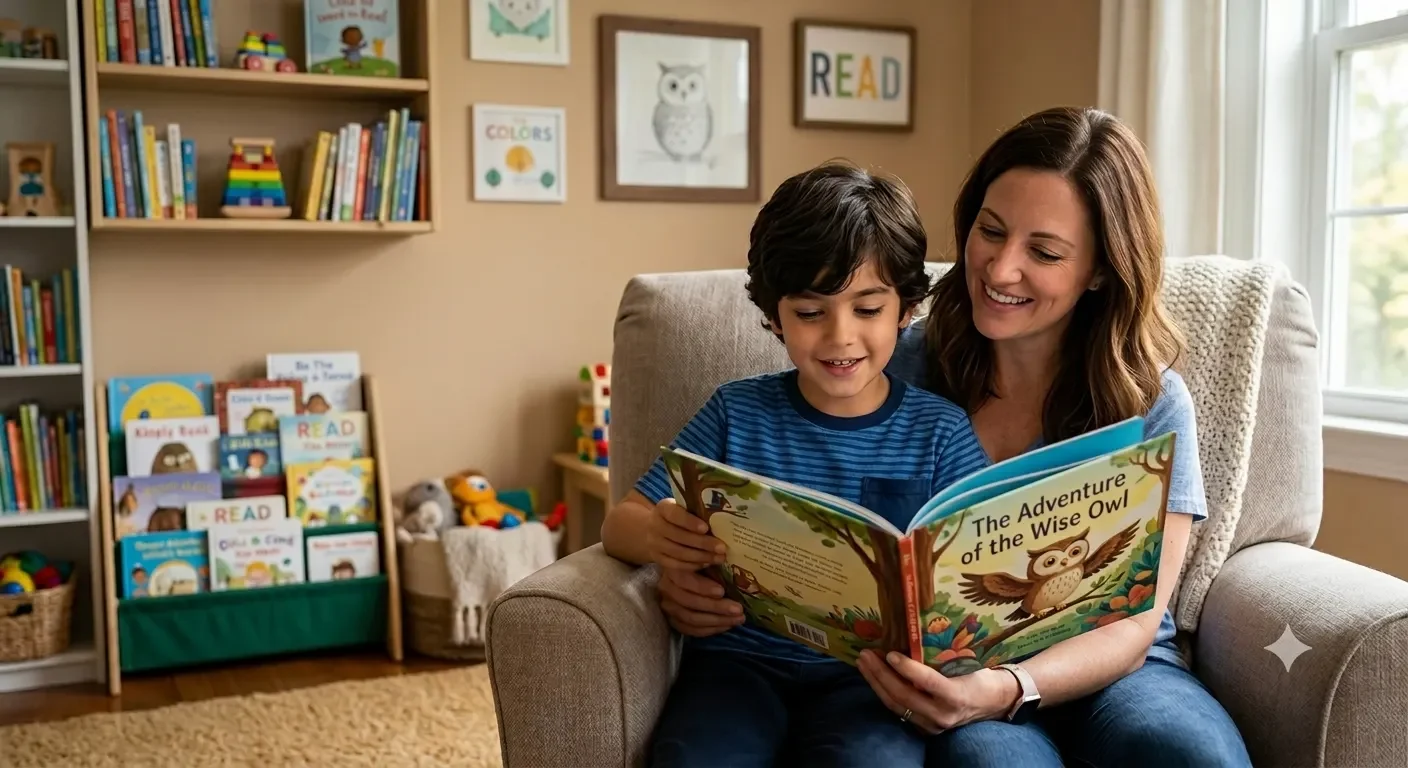
- Read together 15-20 minutes, every day
- Allow kids to select their own reading materials that they like
- Reward effort, not accuracy
- Since the children are in the early stages of learning to read, use simple word games and storytelling.
- Try to make lessons short.
- Be clear and concise, giving directions step-by-step
For instance, reading the labels on groceries with a child can be a literacy opportunity.
To develop confidence through guided and focused literacy interventions
Confidence is a very important factor in reading achievement. When students feel supported they are more likely to practice and improve.
The teachers and parents should:
- Avoid comparing children
- Celebrate small achievements
- Develop a peaceful learning atmosphere
- Don’t be afraid to encourage questions.
After a few months of consistent Special Education Reading Support, a child who reads one paragraph today will be able to read a full page in a few months.
Quick Takeaway Recap
- Reading difficulties are experienced by many students and can be overcome through appropriate strategies.
- Structured and repeated learning is the best approach to the Dyslexia Reading Intervention.
- Literacy development is enhanced through regular reading and emotional support.
- The length of time for targeted Literacy Support should always be that of the individual learner.
Conclusion
Being good at reading isn’t a race, it’s about making gradual progress, being patient, and being guided correctly. Every learner can develop literacy skills and increased confidence with the right Special Education Reading Support. This journey is supported by the family, teachers and caregivers who encourage and provide practical learning approaches. Companies that are experts in the field of literacy, such as Supriya Raja, can provide trusted educational advice that makes literacy support more effective, accessible, and meaningful for students of every age.