How to Improve Spelling Skills in Children at Home
Watching your child struggle with spelling can be frustrating for both of you. You may see them read a word correctly one day and spell the same word differently the next. This does not always mean they are careless or not trying. Spelling requires children to connect sounds, letters, patterns, word parts, memory, and meaning.
The good news is that parents can build spelling skills at home without turning every evening into a spelling test. Short, regular practice works better when children understand why a word is spelled in a particular way and get plenty of chances to use it.
Why Does My Child Struggle With Spelling?
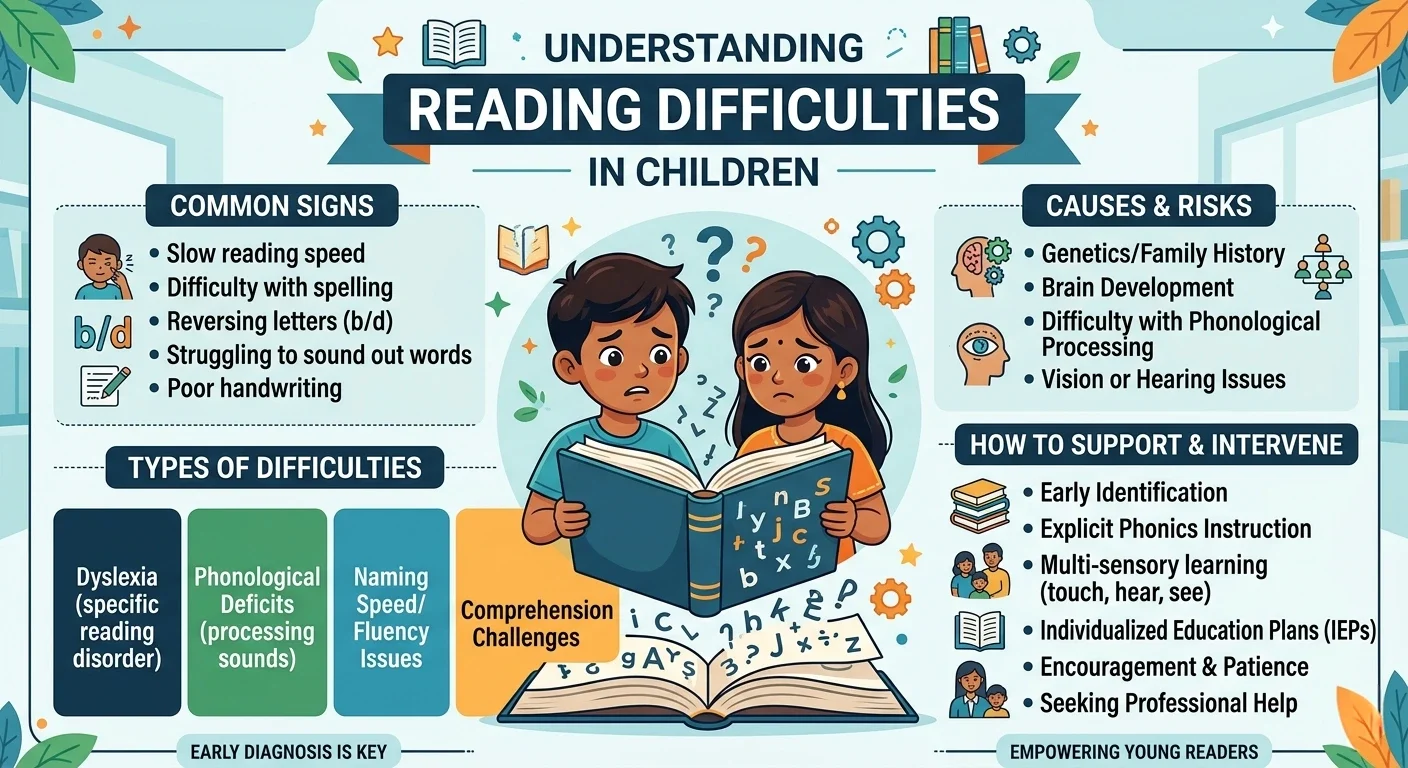
Children can struggle with spelling for different reasons. Some have difficulty hearing individual sounds in words. Others know the sounds but find it hard to remember which letters represent them. Longer words may become difficult because a child has not learned to break them into syllables or meaningful parts.
English spelling also contains patterns that are not always obvious. Words such as “light,” “night,” and “right” share a spelling pattern, while words such as “said” need to be learned differently. A child may therefore need more than repeated copying.
If spelling mistakes are frequent, look for the type of mistake rather than simply counting errors. Is your child missing sounds, mixing up vowels, reversing letters, leaving out endings, or struggling with unusual patterns? Understanding the problem makes practice more useful.
1. Start With Sounds
One of the simplest ways to improve spelling skills is to help your child listen carefully to the sounds in a word.
Say a word slowly and ask your child to stretch it out. For “ship,” they can identify /sh/, /i/, and /p/. Then ask which letters represent each sound. This helps connect spoken language with written language.
For younger children, use simple words they already know. For older children, apply the same idea to unfamiliar words and longer words. The aim is not to make your child pronounce every word unnaturally, but to help them notice sounds when spelling is difficult.
2. Teach Spelling Patterns, Not Just Word Lists
Instead of asking your child to memorise ten unrelated words, group words that share a useful pattern.
For example, practise “light,” “night,” “right,” and “bright” together. Ask your child what they notice. You can also explore common endings such as “-ing,” “-ed,” “-ful,” or “-ness.”
When children recognise a pattern, one lesson can help them spell many words. This is more useful than treating every spelling as a completely separate fact.
3. Break Long Words Into Smaller Parts
Long words can look overwhelming. Teach your child to look for syllables, prefixes, suffixes, and familiar root words.
Take “unhelpful.” Instead of viewing it as one long spelling, break it into “un + help + ful.” With “happiness,” discuss “happy + ness” and notice what changes when the ending is added.
This approach helps children understand how words are built and gives them something meaningful to remember.
4. Use Look, Say, Cover, Write, Check
For a difficult word, ask your child to look closely at it first. Ask, “Which part might be tricky?” Then say the word, cover it, write it from memory, and check it.
If the spelling is wrong, avoid simply saying, “No, that’s wrong.” Ask your child to compare the two spellings and identify the part that changed. Then repeat the word once more.
The important part is writing from memory. Copying a word while looking at it can feel easy, but recalling it without seeing the answer gives your child useful practice.
5. Make Spelling Practice Hands-On
Spelling does not have to mean sitting with a worksheet.
Try building words with magnetic letters, writing difficult words in sand, tracing the tricky part with a finger, using letter tiles, or highlighting a spelling pattern. You can also make simple word cards and play matching or sorting games.
For example, write words containing “ai” and “ay” on separate cards and ask your child to sort them. Then read the groups together.
The best activity is one your child can complete successfully while still having to think.
6. Turn Reading into sSpelling Practice
Reading together gives children regular exposure to correctly spelled words. When you find a useful word, pause and ask your child what they notice about its spelling.
If the word is “careful,” discuss “care + ful.” If you find “playing,” point out the base word “play” and the ending “-ing.”
Do not interrupt every few lines. Choose a few words that match the spelling pattern your child is learning. This keeps reading enjoyable while strengthening spelling knowledge.
7. Practise in Short, Regular Sessions
You do not need an hour of spelling practice every day. Ten to fifteen focused minutes can be enough for many children.
A simple home routine could be:
Monday: learn three to five words or one spelling pattern.
Tuesday: build and write the words.
Wednesday: use the words in sentences.
Thursday: recall the words without looking.
Friday: review only the words that still cause difficulty.
Keep successful words in the review occasionally, but spend most of your time on the words your child hasn’t mastered.
8. Correct Mistakes Without Damaging Confidence
Constantly pointing out every spelling mistake can make a child afraid to write. Instead, choose two or three useful words to work on at a time.
Praise the effort and the strategy, not just the correct answer. You might say, “You heard all the sounds in that word,” or “You remembered the pattern we practised.”
Encourage your child to try unfamiliar words. A first attempt gives you valuable information about what they already understand.
When Should Parents Seek Extra Spelling Support?
If your child continues to struggle despite regular, supportive practice, it may be worth discussing the difficulty with their teacher or a qualified learning specialist. Pay attention if spelling problems occur alongside persistent reading difficulties, trouble identifying sounds, or strong frustration around written work.
Extra support does not mean your child is less capable. It means they may need a different teaching approach and more structured practice.
How Power Reading Hub Can Help
Home practice is valuable, but some children need structured guidance to understand why spelling continues to feel difficult. Power Reading Hub supports children who are struggling with reading, spelling, comprehension, and writing through a structured approach designed to build stronger literacy skills.
If your child is working hard but still finding spelling difficult, professional guidance can help identify the skills that need attention instead of relying on endless repetition.
Final Thoughts
Improving spelling skills in children at home is not about making them memorise longer lists. It is about helping them hear sounds, recognise patterns, understand word parts, practise recall, and use new words in meaningful ways.
Keep sessions short, focus on one skill at a time, and protect your child’s confidence. With patient practice and the right support, spelling can become less stressful and more manageable. A calm routine also gives parents a chance to notice progress over time, celebrate small improvements, and adjust practice before frustration becomes a daily habit at home each week.