How To Teach A Child To Read: A Parent’s Guide
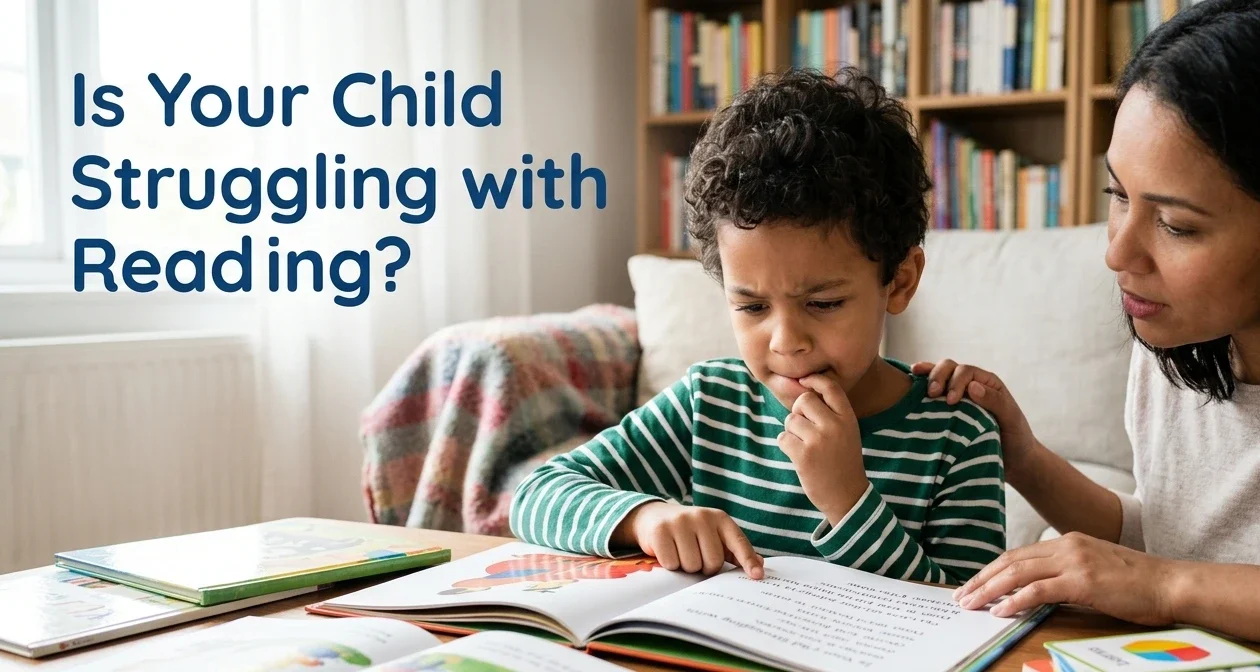
It can be hard to watch your child struggle to read. You can only imagine how great it would be to watch your child pick up a book and read it. Unfortunately for many people, reading becomes a long and tedious process full of mental exhaustion and discouragement.
There are many parents who are just like you. It is very normal for children to experience Reading Difficulties in Children, but they do not have to limit your child’s future.
Every child can learn to read if they are given the right tools and the process to do so. Supriya Raja believes all children can learn to read if given the right tools. We are happy to provide support as you look for a Reading Tutor For Kids, or if you would like to Learn How To Help Child Read Better. It is essential to know how the reading process works to understand where the gaps are.
Why Kids Get Frustrated Learning How To Read
There are many reasons that kids get frustrated with learning how to read. It is important to understand these reasons before you try and use any of the strategies.
There are many types of reading problems and without intervention, children will grow to have a dislike for reading. There are many problems that can occur when building the basic building blocks the skills needed to read.
- Phonological Awareness: Children need to know that sounds can be spoken and broken up into segments and that they can be put back together to form a word.
- Decoding Gaps: Children need to know that letters can be taught to form specific sounds and can be linked to form words.
- Fluency Barriers: Unable to comprehend a sentence because they are expending brainpower sounding out letters in a word.
When a child reaches this roadblock, traditional education and standard workbooks are insufficient. What they need is a systematic approach to reconstruct the foundation of their literacy.
The Step-by-Step Blueprint to Teach a Child to Read
Reading should be a joyous and fluid activity. A foundation must be built, not the memorization of whole words.
1. Develop Sound Awareness:
Reading is a tool for processing the spoken word, so it is important to practice sounds prior to reading. Play word games. Ask, “What sound does ‘cat’ start with?” or “Can you put the sounds /b/ /a/ /t/ together?” Knowing the sounds that comprise words will make writing and reading easier.
2. Introduce Phonics in Order:
Teach your child that sounds fit into a system by teaching them a few consonants and a few vowels. It is as simple as saying mat instead of bat. Do not teach a structure that has more exceptions than rules.
3. Teach Decoding and Blending:
Have your child trace a word with their finger as they sound it out. Teach them to blend all the sounds of a word together as they read. Teach them that saying the sounds of the word /s/ /i/ /t/ with pauses is incorrect. Instead, say it as a single unit.
4. Shift from Decoding to Fluency:
The goal is to have your child reading with not only the correct word, but with understanding. What will help achieve this is reading the same stories over and over again. This will allow them to practice spotting the words with ease and help them focus on understanding the story.
Practical Methods to Improve Your Child’s Reading Skills
Your home environment can help your child transform from a struggling reader to an accomplished reader. Of course, the right kind of environment is just as important as the structured practice.
1. Remove the Stress
When a child is anxious, their brain goes into fight-or-flight, which makes reading even more difficult to learn. If your child can’t move beyond a word, don’t let them sit in frustration. Say it for them, give them the word, and move on. Praise their effort.
2. Use Only Decodable Books
Most beginner reader books contain high complexity words that a child cannot figure out by using phonics. When this is the case, children are left to guess based on the picture. Use only decodable books. They will be books that will give your child the practice and confidence to read.
3. Read Together, Daily
Even if your child is attempting to read without you, continue reading to them. Even parents of accomplished readers should continue reading to them. Reading helps children hear the structures and vocabulary they are yet to learn. It will also help them be reminded that reading has many stories.
When to Get a Specialized Children’s Reading Tutor
A lot of parents waste their money on general academic tutors, only to find that their child is still struggling to read (and still in need of a reading tutor). School general tutors support classroom and homework learning, and fill in the curriculum gaps, which won’t assist struggling readers in the early reading gaps.
If your child is in second grade or above and still resorts to guessing, leaving lines blank, or crying during reading, it may be appropriate to seek specialized intervention.
At The Supriya Raja Approach, through our 4 Pillar Power Reading System, we do not focus on fixing the reading assignment problems. We find the point at which the gaps in your child’s reading and writing literacy skills began, and we fill in those gaps joyfully.
Every child deserves the opportunity to experience the joy of reading and to learn to love reading for pleasure. By the thoughtful understanding of their individual challenges, simplifying the reading process, and offering a clear, organized approach to the reading process, we believe we can help your child overcome reading challenges and bring them the gift of reading for a lifetime.