Key Takeaways
- Reading Problems in Children are frequent and may impair comprehension, fluency and confidence.
- The sooner the better.
- This can be due to learning problems, practice or lack of motivation.
- Children learn better in a structured and supportive environment.
- Long-term outcomes are achieved by small daily activities, such as reading aloud or practicing phonics.
- The “Empowered Teaching Set Up Challenge has a 5-day plan that is easy to follow by parents and teachers.
- It is more about encouragement, patience and consistency, rather than strict pressure.
Learning about Reading Problems in Children
Reading Problems in Children are not merely about difficulties in working with words. These may involve a high level of difficulty in identifying letters, reading at a slow pace, missing lines or being unable to comprehend what was read.
Other children can stop reading altogether due to its stressfulness or embarrassment. Others can read but not comprehend the meaning.
Common Signs
- Difficulty in recognizing letters or sounds.
- Difficult or impaired reading.
- Omission of words or lines.
- Poor comprehension
- Evading reading or books.
- Lack of confidence in school activities.
Early recognition of these signs can assist in making the appropriate course of action before the issue escalates.
Reasons behind Reading Problem in Children
No single cause exists. Frequently, it is a combination of factors:
- Learning Difficulties
Disabilities such as dyslexia may interfere with the processing of words and sounds by the child.
- Poor Reading Practice
Children who lack early exposure to books may not do so well.
- Language Barriers
In case the school language is not the same as the home language, it would be difficult to read.
- Low Confidence
Children may fear to make mistakes hence not trying.
- Poor Teaching Methods
Not every child studies in the same manner. A single approach will not be applicable to all.
The Empowered Teaching Set Up Challenge (5-Day Plan)
It is a simple 5-day plan to assist parents and teachers to solve Reading Problems in Children in a practical manner.
Day 1: Observation and Comprehension
Begin with examining the reading patterns of the child.
What to do:
Request the child to read a short passage.
Fail to correct errors in notices.
Determine whether it is a speed, pronunciation or comprehension problem.
Instruction: Learn to learn without strain.
Day 2: Construct an environment of safe reading
Children are in a better position to learn when they are safe and relaxed.
What to do:
Select easy, engaging books.
Still together, and read without judgment.
Value hard work, not excellence.
Example:
When a child is having difficulties with a word, say:
Well done, shall we read it together.
Purpose: Eliminate fear and develop comfort.
Day 3: Phonics and Basics
Good Foundations resolve most Reading Isses in Children.
What to do:
- Reads practice letters every day.
- Employ simple word-building practice.
- Divide words into smaller sounds.
Example:
Teach: not cat, but
c + a + t = cat
Purpose: Enhance word recognition.
Day 4: Enhance Fluency and Confidence
When the basics are better, work on fluent reading.
What to do:
Read aloud 10-15 minutes.
Read the same passage over and over again to develop fluency.
Play or tell a story.
Example:
Allow the child to read as a story teller, in phrases.
Purpose: Learn to read in a natural way and enjoy it.
Day 5: Build Comprehension Skills
Reading is not about words, it is about comprehending.
What to do:
Ask questions of simple reading.
Ask the child to use his or her own words.
Make connectivity using pictures and stories.
Example Questions:
What was it all about?
What was your favorite character?
Objective: Develop knowledge and cognition.
Practical Teaching Strategies
The following are simple techniques which are effective:
- Read Together Daily
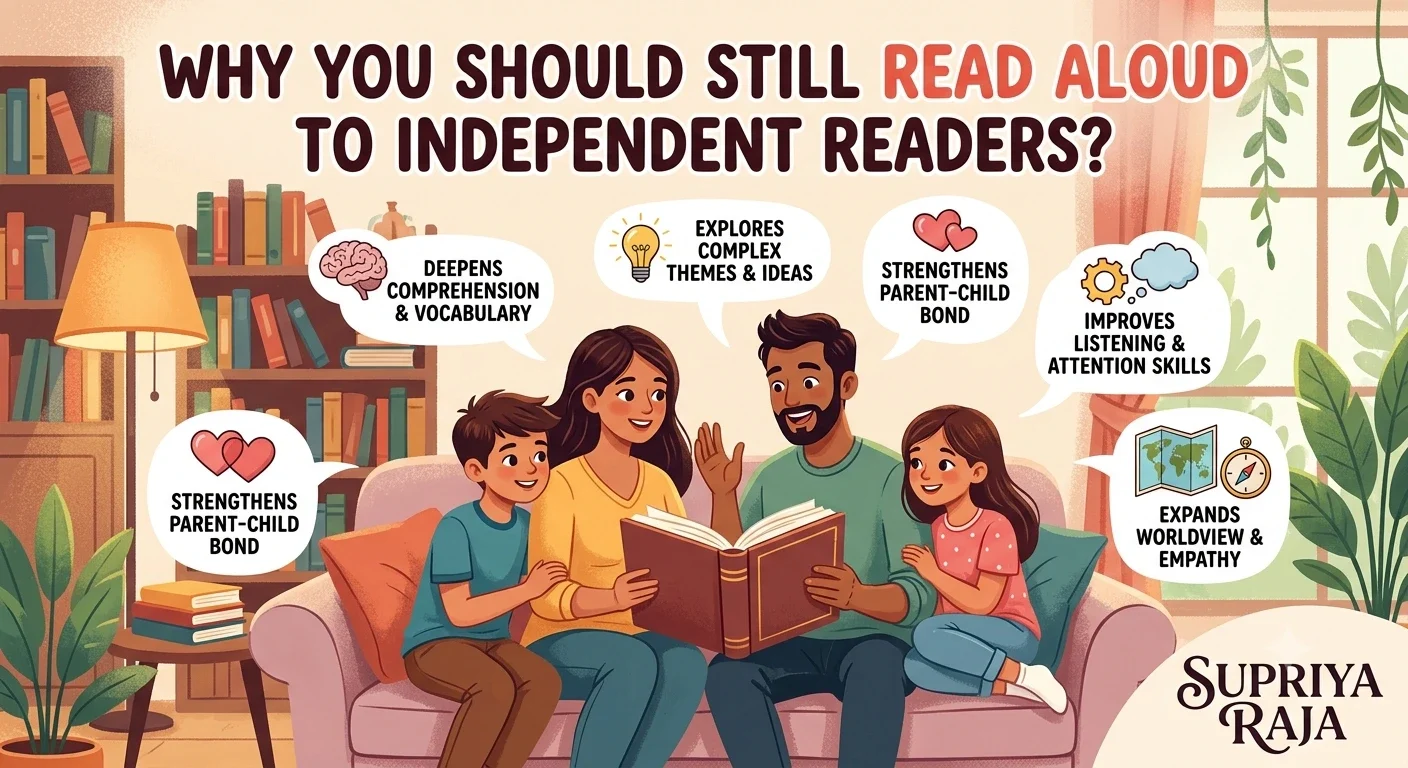
Reading skills can be enhanced even after 15 minutes a day.
- Use Visual Aids
Children can memorise pictures, flashcards and charts.
- Take Tasks in Little Bites.
Big paragraphs are daunting. Start small.
- Encourage Repetition
Confidence and speed is enhanced by re-reading the same text.
- Use Real-Life Examples
Learn by reading signboards, menus, or labels.
Relatable Example
Consider a child Rohan who does not read at school. He reads at a slow pace and makes many mistakes in reading.
Rather than pressuring him, his parent begins to read with him everyday. They select uncomplicated storybooks, learn phonics, and applaud minor progress.
Rohan begins to read with confidence within a few weeks. He starts to enjoy reading and his mistakes decrease.
This demonstrates that Reading Problems in Children can be resolved by the appropriate approach.
Practical Advice to Parents and Teachers
- Patience is a virtue–time is right.
- Do not compare children to other children.
- Establish a reading habit.
- Celebrate small achievements
- Be consistent with practice.
- Discuss with teachers as necessary.
Short Takeaway Recap
- Issues with reading among children are widespread and easy to handle.
- Practice and early encouragement are important.
- A 5-day plan, which is structured, can bring a significant change.
- Pressure is not as important as confidence and encouragement.
Conclusion
Problems in Reading in children must not be overlooked. All children learn at their own pace and with the proper direction, they will be able to become confident readers.
Powerful effects can be produced by the help of simple steps, daily practice and a supportive environment. You, be it a parent or a teacher, play an important role in the learning process of a child.
The smallest changes made with the appropriate attitude and effort can make a large difference, as the vision of Supriya Raja, where the growth starts with the appropriate strategy and belief.